News at FSUCML

Undergraduate Erin Tilly Walks the Stage


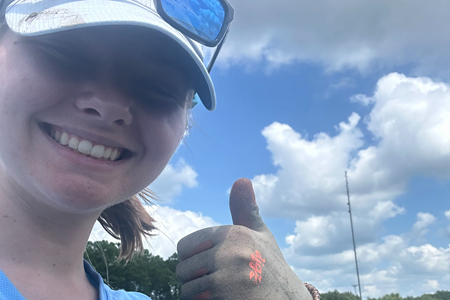
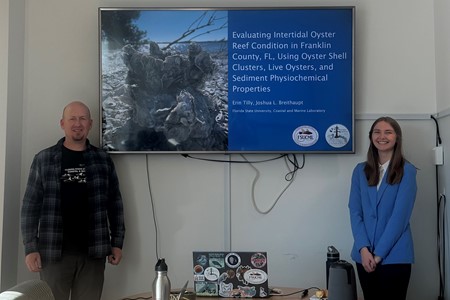
Over the last few weeks, the Florida State University community has come together to grieve, to reflect, and to support one another like never before.  This weekend, we will come together in celebration as we recognize students walking in the spring commencement.  In the words of FSU President Richard McCullough, “These ceremonies will be a powerful reminder of what we share as a community: strength, compassion, and hope for the future.”  We are excited to celebrate one of our undergraduate students, Erin Tilly, as she walks the stage this weekend.
Congratulations to Rachel and Selma!


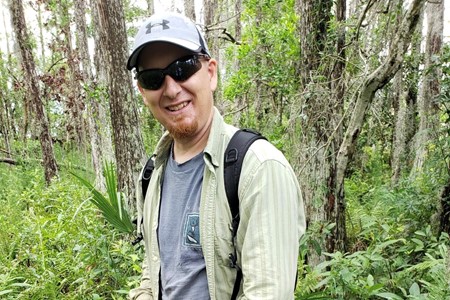
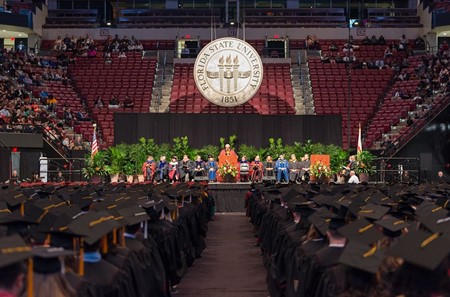
Just like that, 2024 is coming to a close! We have two spectacular graduate students from the Breithaupt lab walking the stage during FSU’s winter commencement – Rachel Biton and Selma Squafi. Both will receive their Master’s – congratulations! We can’t wait to see the impact you will make in your future endeavors. Read on to learn about their time at FSU and where they are headed next.

10 Years of Post-Oil Spill Science


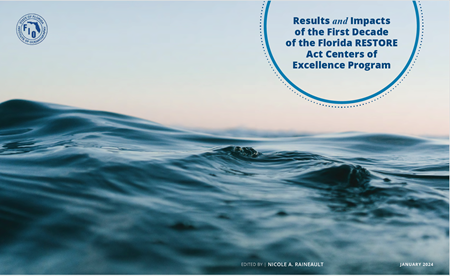
Dr. Sandra Brooke, Dr. Josh Breithaupt, and Dr. Dean Grubbs were among the many scientists who contributed to the "Results and Impacts of the First Decade of the Florida RESTORE Act Centers of Excellence Program" report. This report covers a variety of fields and projects within Florida in the aftermath of the BP Horizon Oil Spill.

Coastal Wetland Soil Carbon Storage at Mangrove Range Limits in Apalachicola Bay


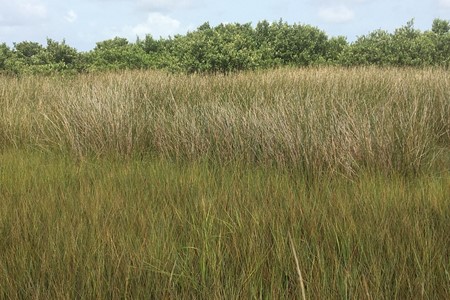
When Dr. Breithaupt joined the FSU Coastal & Marine Lab he was surprised to learn that there were mangroves in the area. Like many, he shared the perception that mangroves weren’t found north of Cedar Key on the Gulf Coast of Florida. Much of his previous research has explored the importance of carbon in mangrove ecosystems, particularly the soils. So, when Dr. Steinmuller* joined Dr. Breithaupt’s lab as a Postdoctoral Scholar in August of 2021, one of the first projects they tackled was the question of how mangrove replacement of local saltmarshes might affect soil carbon storage in the Apalachicola Bay region.