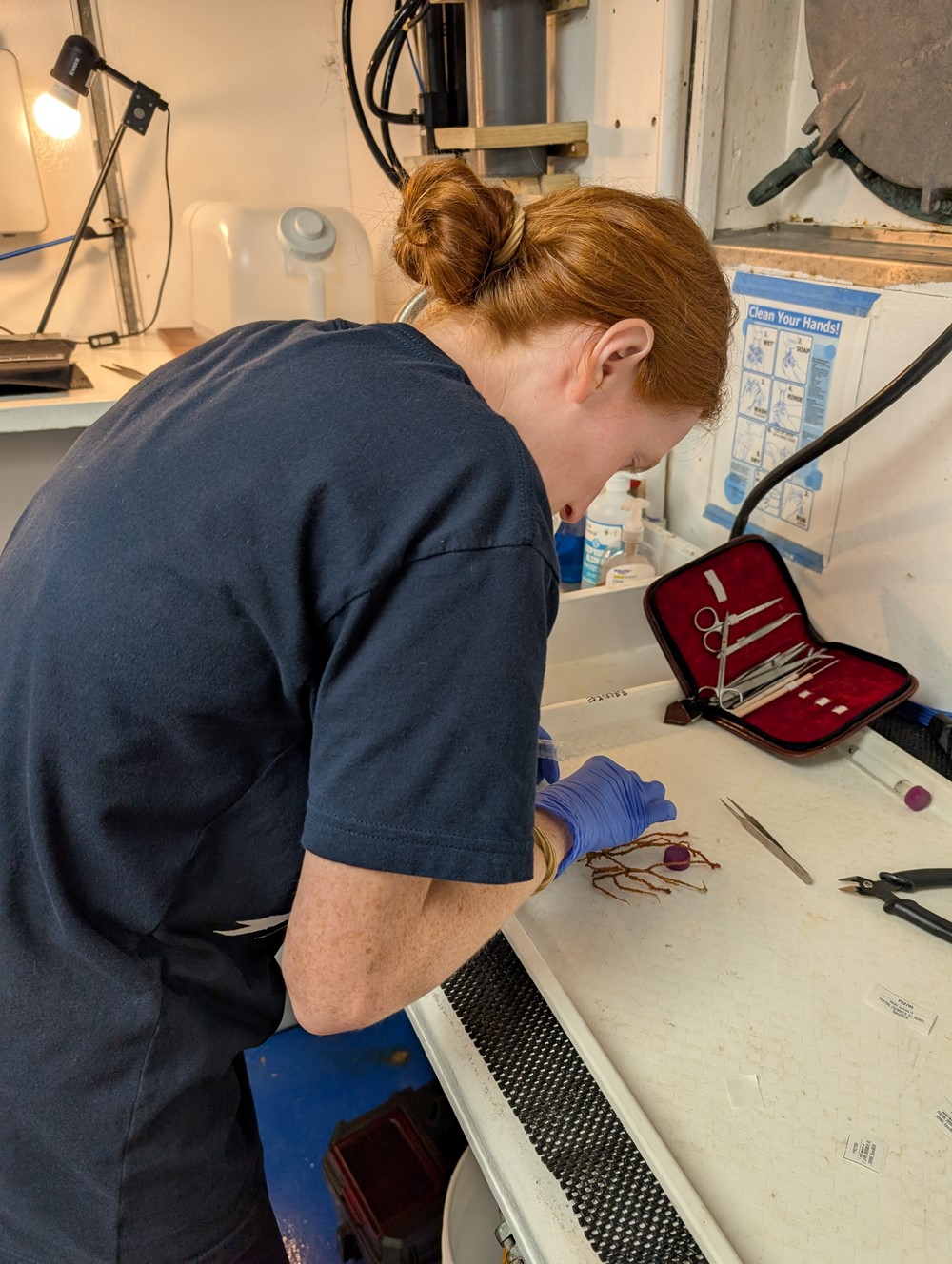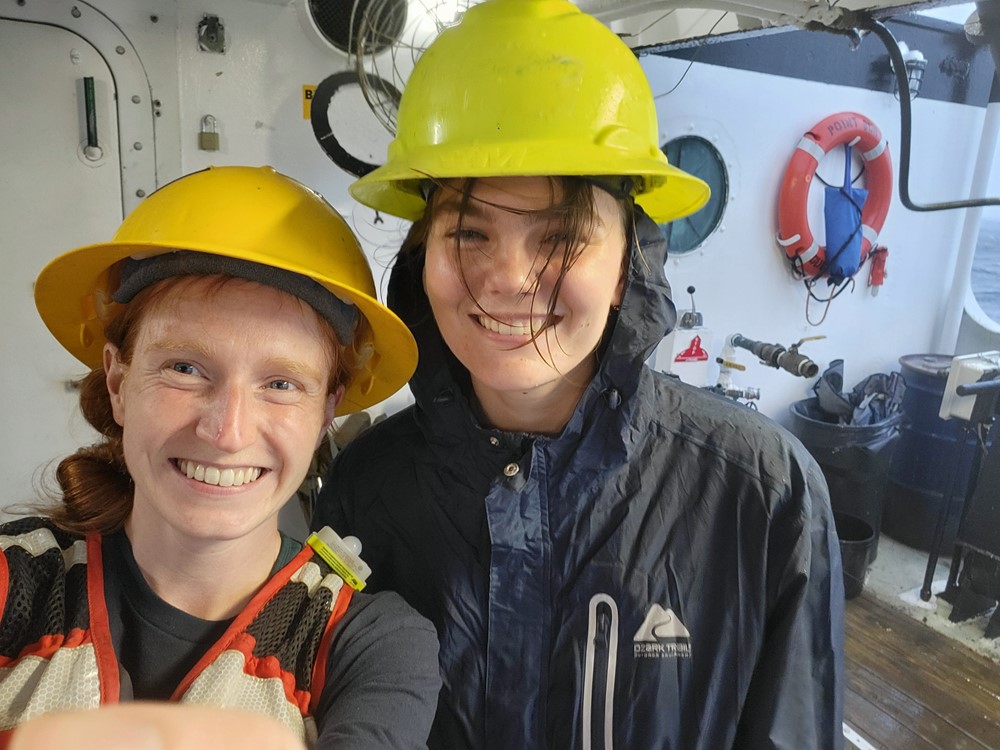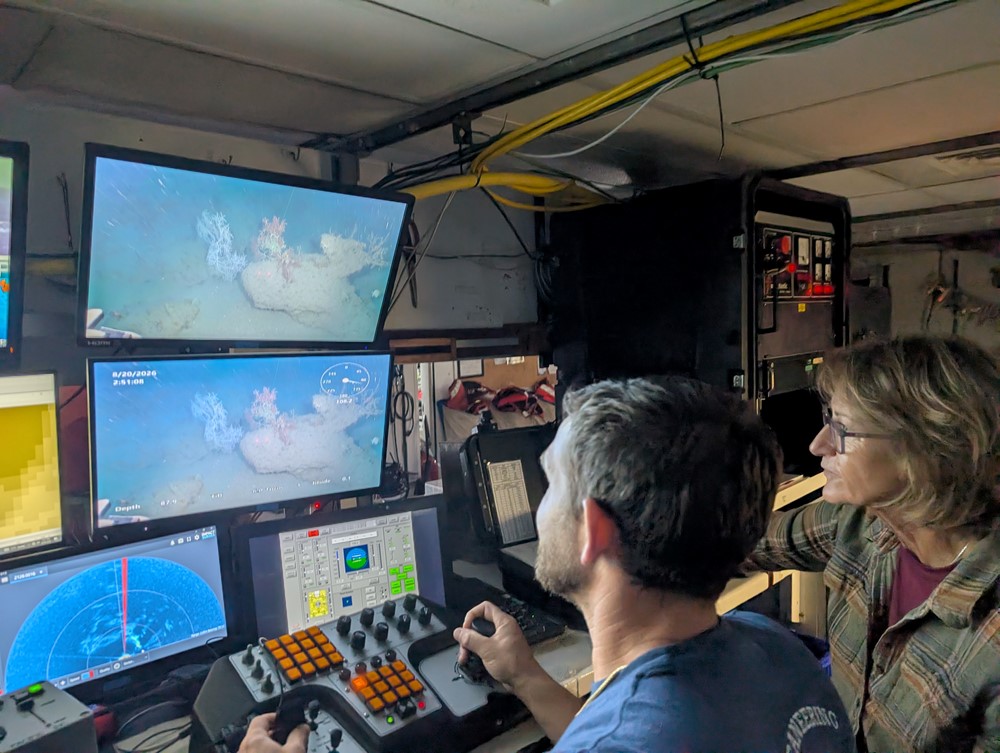
Gulfport, Mississippi, USA (Sept. 22nd, 2026) --- This summer, from August 18th to 26th 2026, FSUCML faculty member, Dr. Sandra Brooke, accompanied by her PhD student, Laura Anthony, and histology technician, Katarina Simonson, embarked on a nine-day research cruise aboard the R/V Point Sur. This cruise, the second of four research cruises to explore and study Mesophotic Coral Ecosystems (MCEs) on the West Florida Shelf (WFS), was funded through the Florida RESTORE Act Centers of Excellence Program (FLRACEP) through the Florida Institute of Oceanography as part of a $4 million research initiative.
Why Study Mesophotic Coral Ecosystems (MCEs)?
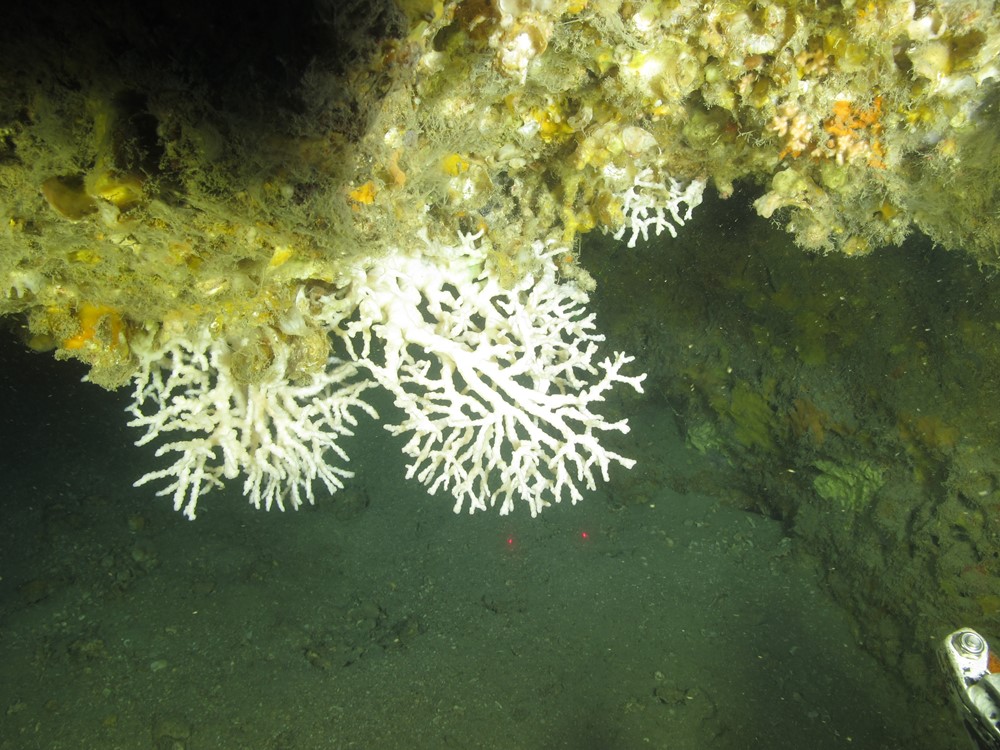
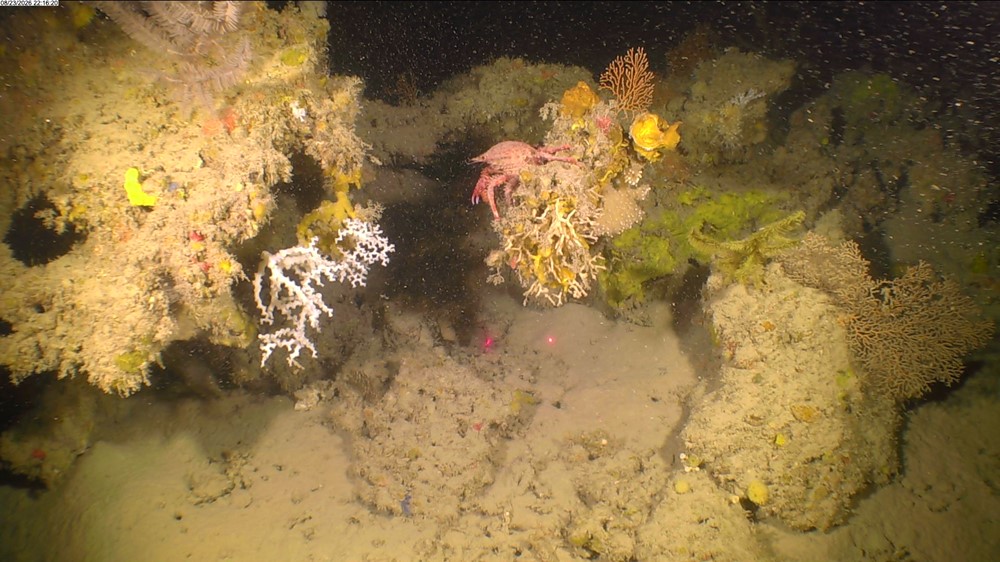
Mesophotic, or ‘twilight zone’ ecosystems are generally found on rocky areas between 30 and 150m depth. Mesophotic corals support diverse communities of invertebrates and fishes, and provide ecosystem services such as valuable fisheries. Despite their economic and ecological importance, they are understudied in terms of benthic community characterization and our understanding of the processes influencing their health, resilience, and productivity is minimal. Understanding the nutrient dynamics that feed these systems, and how food supply influences community structure, reproduction and physiology will help researchers better understand their resilience to natural and anthropogenic impacts.
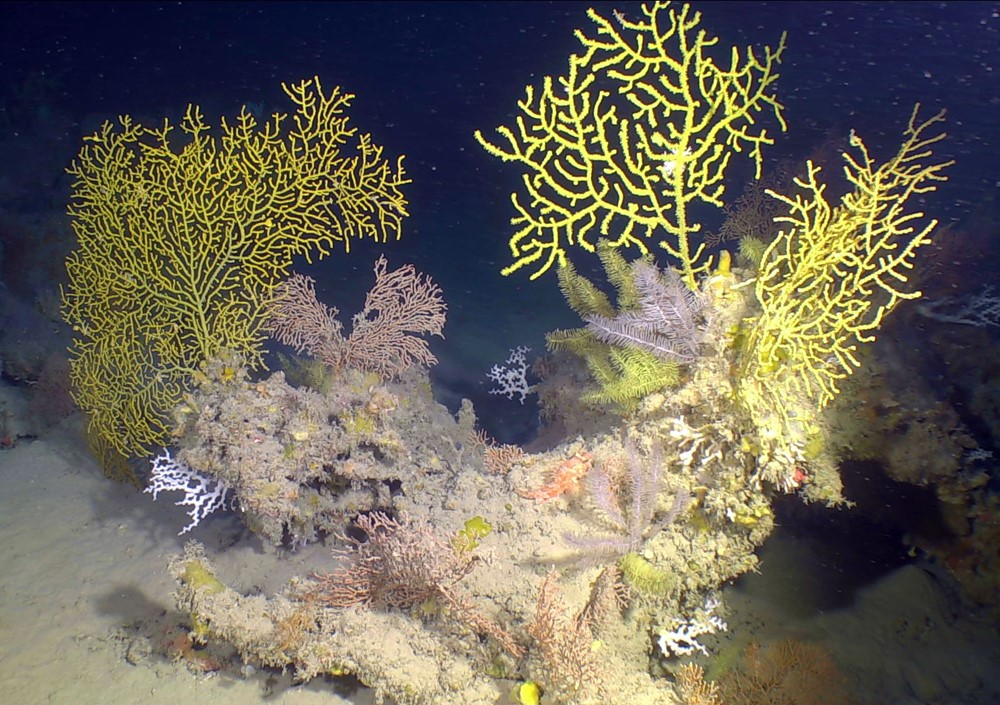
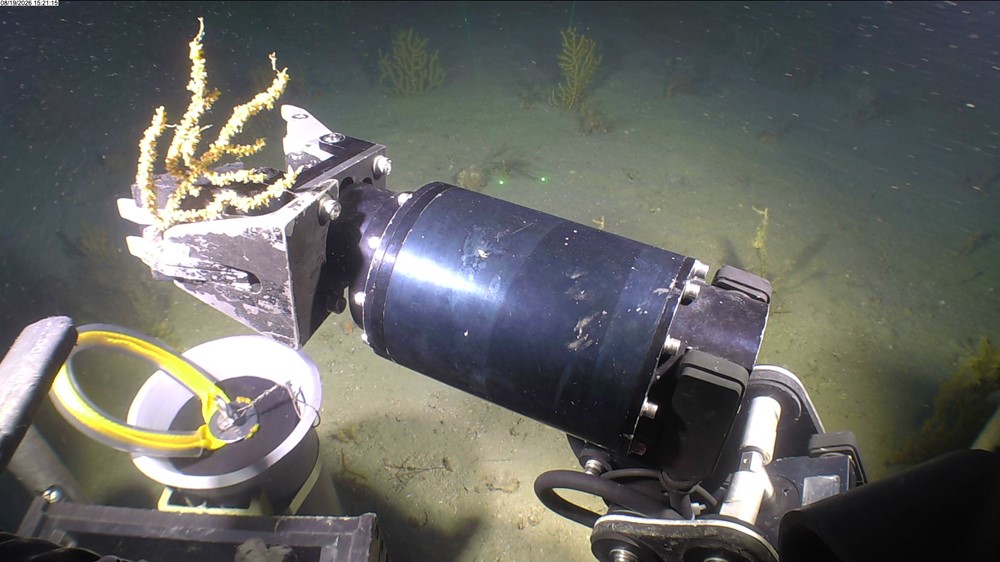
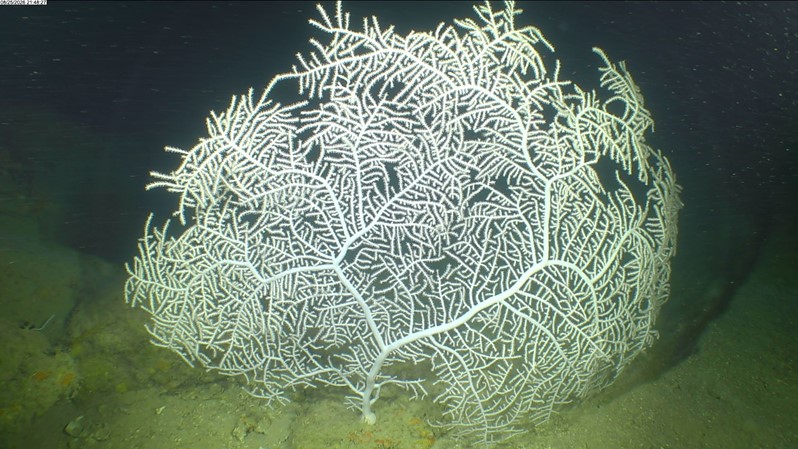 Octocoral “Hypnogorgia pendula” observed by the ROV
The Expedition
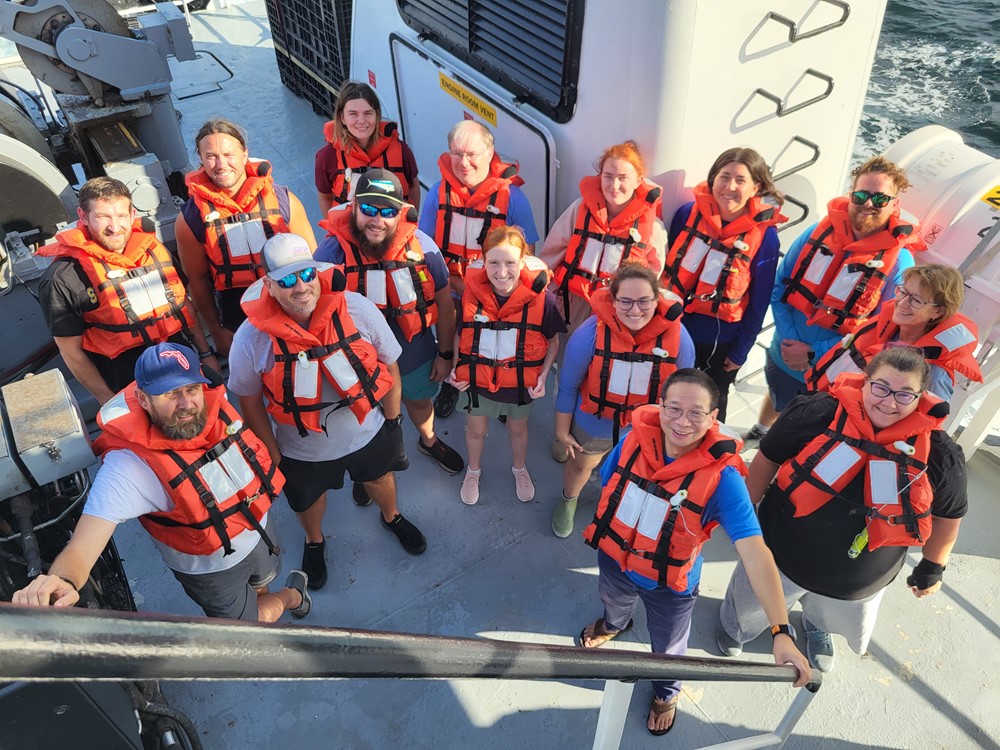
The expedition included a science team of 15 and spanned 986 nautical miles, starting in the Mississippi Delta/De Soto Canyon area and ending in an underexplored area of the West Florida Shelf known as the Sticky Grounds. Dr. Brooke served as Chief Scientist alongside the project PI, Dr. Mingshun Jiang, an Associate Research Professor at Harbor Branch Oceanographic Institute (FAU). The overarching goal of the project is to improve our understanding of the dynamics and drivers of nutrient supply and sediment flux over the WFS, and their impacts on water column and benthic productivity.
Research Methods & Sampling
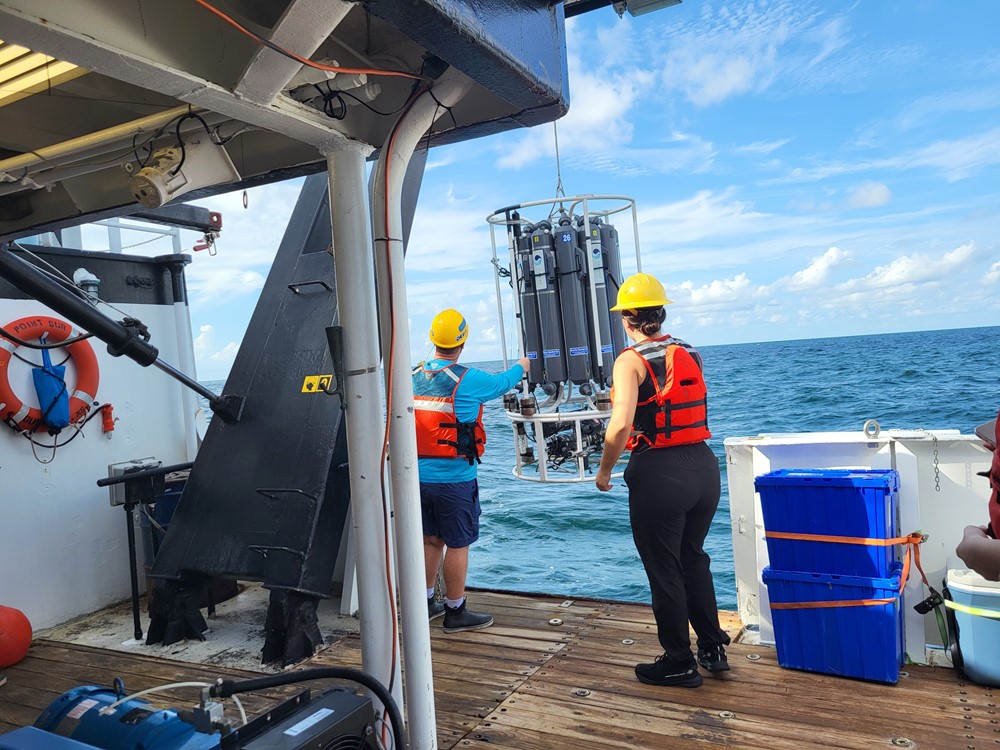
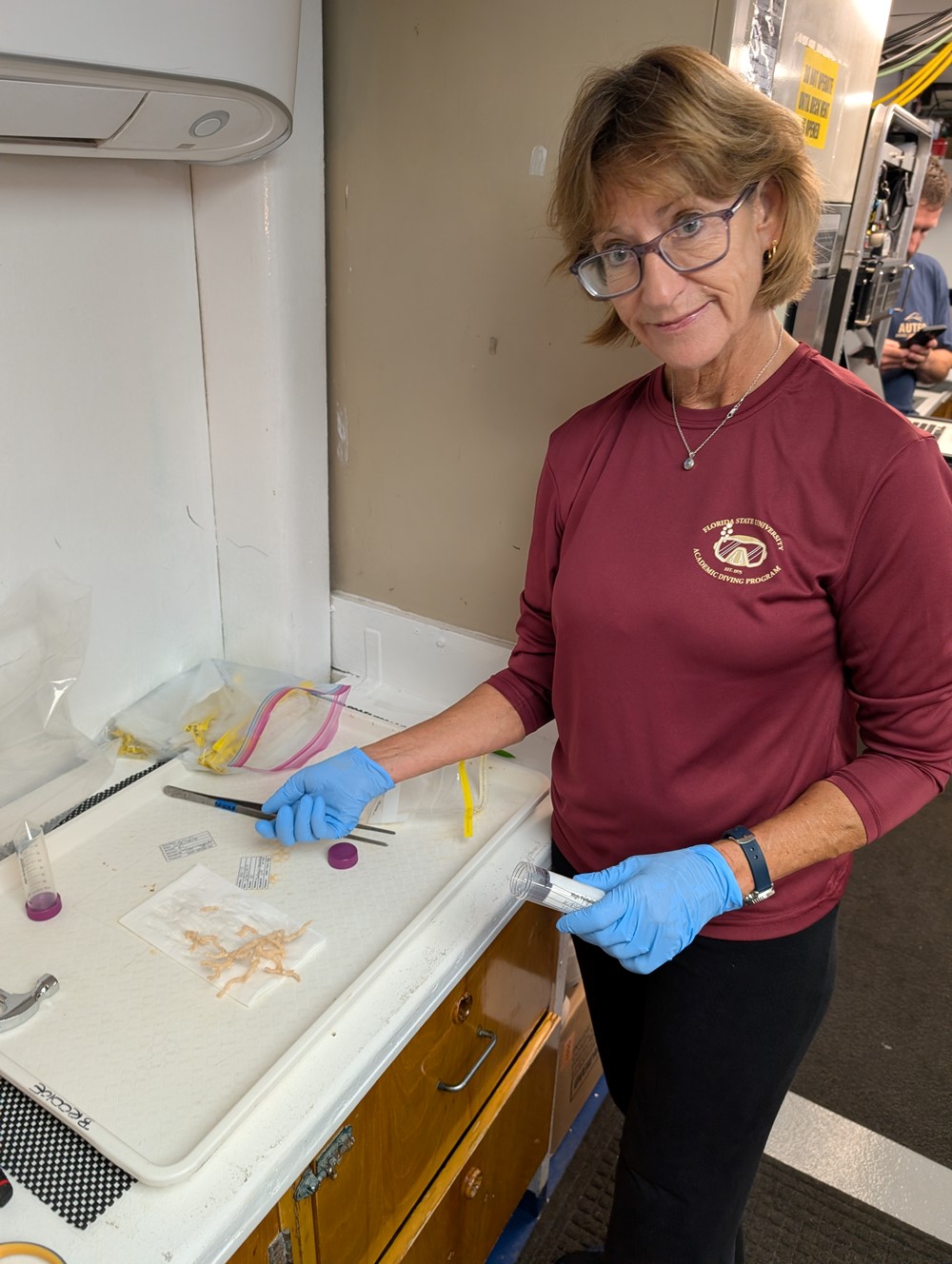
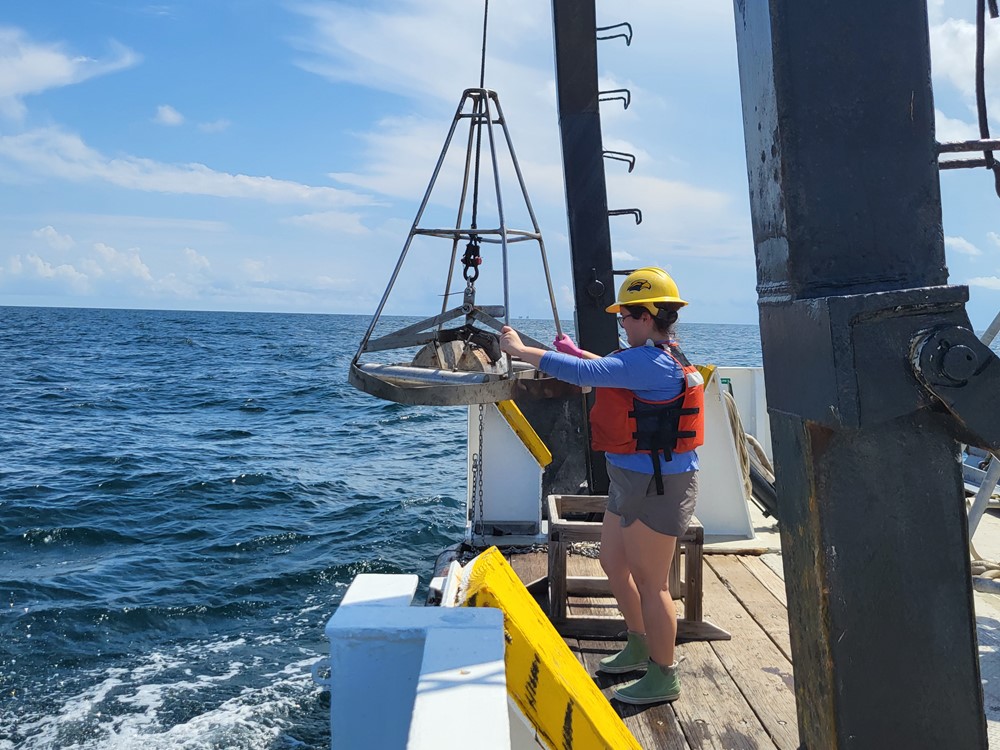
To address the project goal, FAU scientists collected environmental data and water samples at various locations in the study area to improve hydrodynamic and fish larval dispersal models. Three benthic landers that were deployed by FAU during a cruise in October 2025, were successfully recovered during this cruise. Landers support instruments that remain on the seafloor for extended periods, gathering environmental data that cannot be collected during a short research cruise. The landers will provide valuable data to support the modeling efforts. Sediment samples were also collected to understand benthic productivity patterns and dynamics, and cutting edge plankton imaging instruments were deployed to gather information of quantity and diversity of planktonic animals, which provide food for the MCEs. The FSU coral team also collected samples of stony corals and octocorals to compare the physiological traits between those found at “High Food Sites” near the Madison Swanson Marine Reserve and those found at “Low Food Sites” south of the river plume influence at the Sticky Grounds.
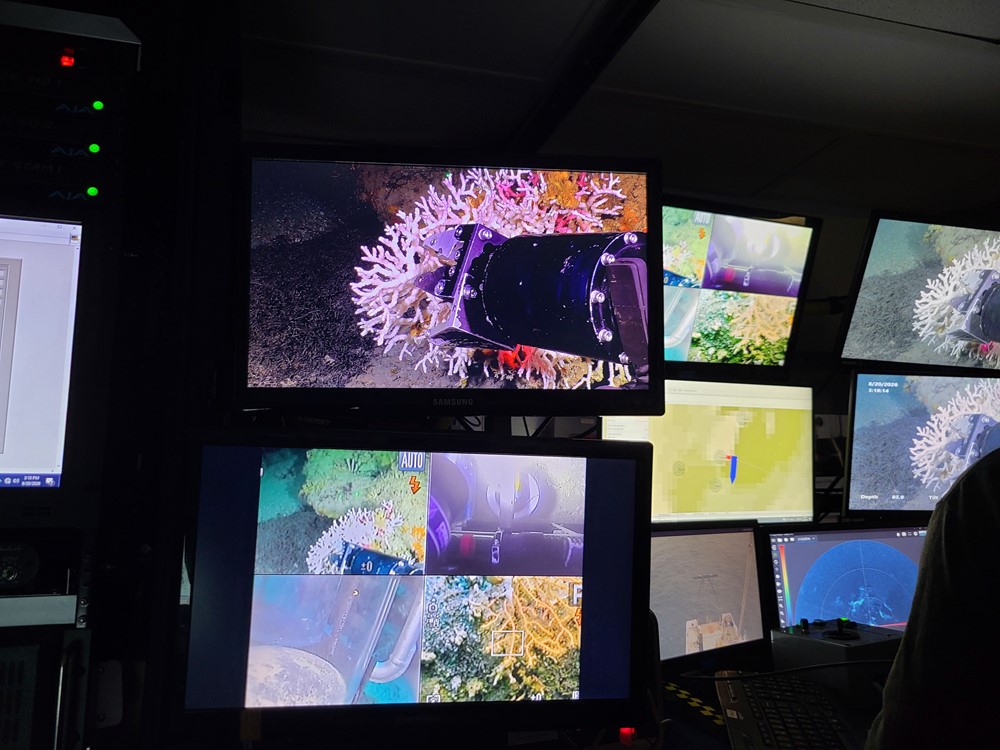
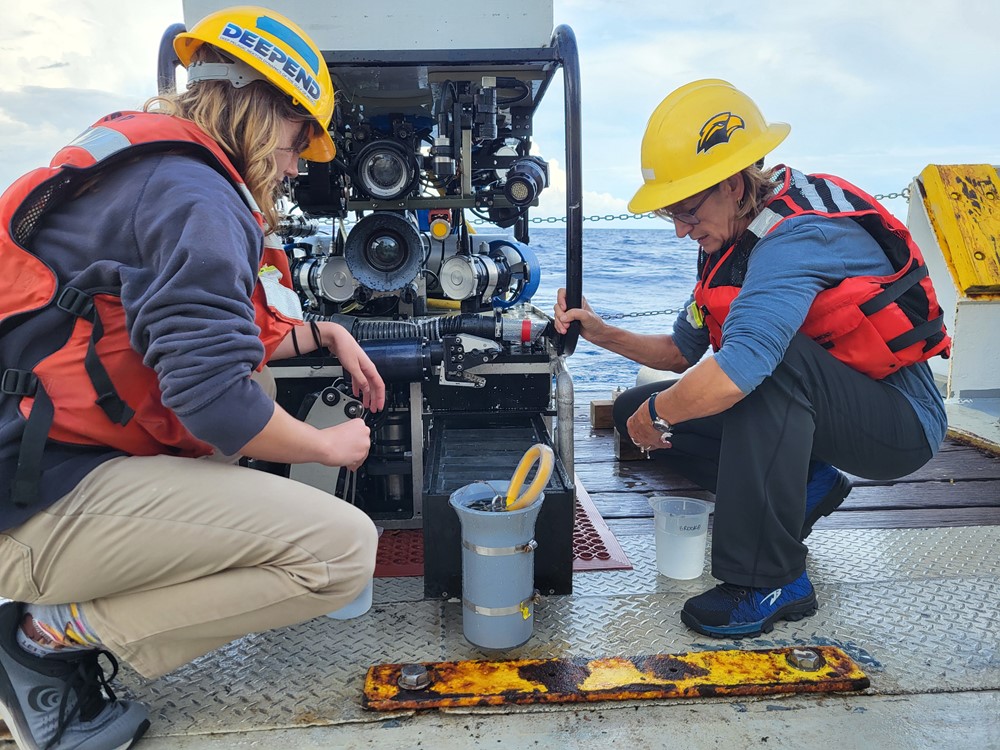
To survey the MCEs and collect coral samples, researchers used a Remotely Operated Vehicle (ROV); the ROV Mohawk (University of Southern Mississippi). These vehicles are attached to a fiberoptic cable that transmits images in real-time back to the scientists on the ship. During the cruise, The ROV team completed 68 dives to an average depth of 110 m, recorded 41 hours of footage and collected 102 samples to support the FSU coral research objectives.
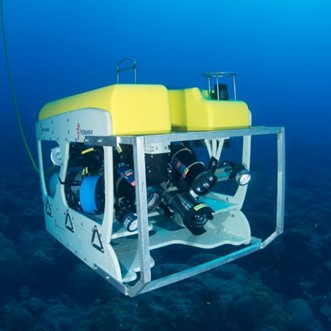 ROV Mohawk, owned and operated by the University of Southern Mississippi
Looking Ahead
This project is still ongoing, with two more research expeditions planned for the near future.
Researchers on Board:
Chief Scientist
Dr. Sandra Brooke, FSU
Project PI
Mingshun Jiang, FSU
NOAA Collaborator
Stephine Farrington, FSU
ROV Team
Tim Cook, USM
Max Woolsey, USM
Doug Faircloth, USM
Lander Team
Gabriel Alsenas, FAU
Erik Bosold, FAU
Graduate Students
Sofia Cuellarsola, FAU
Madison Bennett, FAU
Olivia Ruchti, FAU
Collin Hebner, FAU
Jonathan Terzado, FAU
Laura Anthony, FSU
Technician
Katarina Simonson, FSU
To learn more about the FSUCML, visit www.marinelab.fsu.edu. Please email Jared Fuqua jfuqua@fsu.edu or Grace Lawhorn gl25g@fsu.edu with any questions.